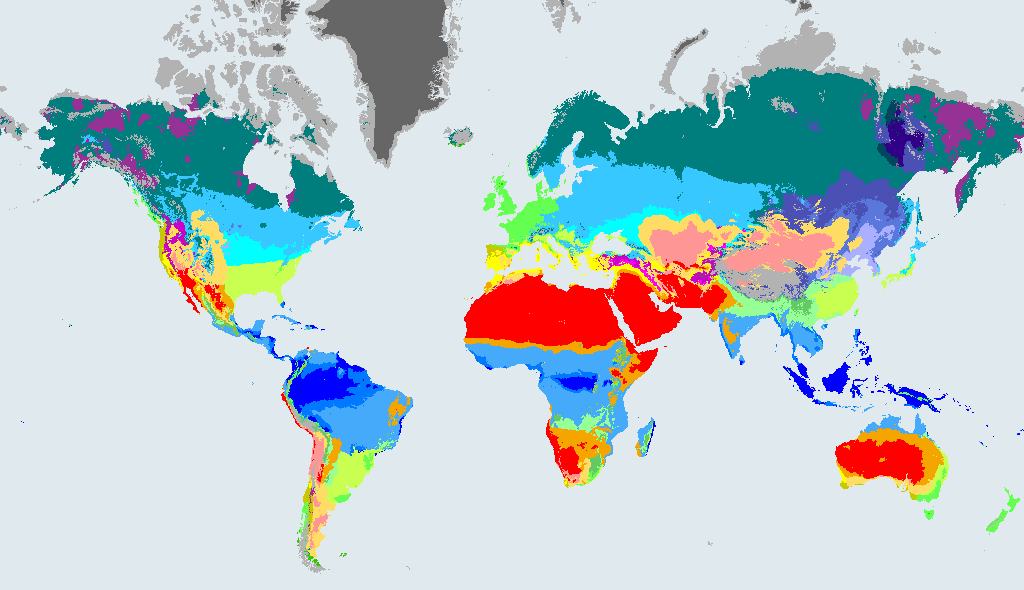
One zone, Csa (hot-summer Mediterranean), taken from the nearest map cell.
Tap or scroll to load the interactive map
A: Tropical
Af Tropical rainforest
Am Tropical monsoon
Aw Tropical savannah
B: Arid
BWh Hot desert
BWk Cold desert
BSh Hot semi-arid (steppe)
BSk Cold semi-arid (steppe)
C: Temperate
Csa Hot-summer Mediterranean
Csb Warm-summer Mediterranean
Csc Cold-summer Mediterranean
Cwa Humid subtropical with dry winter
Cwb Subtropical highland (dry winter)
Cwc Cold subtropical highland (dry winter)
Cfa Humid subtropical
Cfb Temperate oceanic
Cfc Subpolar oceanic
D: Cold (continental)
Dsa Hot-summer continental with dry summer
Dsb Warm-summer continental with dry summer
Dsc Subarctic with dry summer
Dsd Subarctic with dry summer and very cold winter
Dwa Hot-summer continental with dry winter
Dwb Warm-summer continental with dry winter
Dwc Subarctic with dry winter
Dwd Subarctic with dry winter and very cold winter
Dfa Hot-summer humid continental
Dfb Warm-summer humid continental
Dfc Subarctic (boreal)
Dfd Subarctic with very cold winter
E: Polar
ET Tundra
EF Ice cap (frost)
How to read the map. Each colour is a Köppen-Geiger climate class. The first letter is the major group (A tropical, B arid, C temperate, D cold, E polar); the other letters say how dry it is and how warm or cold. Tap anywhere to see the class under that spot in 1901 to 1930, 1991 to 2020 and, under three emissions scenarios, 2071 to 2099. The codes and names are always given in words, because colour alone is hard to tell apart for some people.
1901 to 1930 is a reconstruction from historical records and models, so it is less certain than the recent map.
Köppen-Geiger classes are based on 30-year averages of temperature and rain, not on the weather on any one day.
A model projection of 2071 to 2099 under the chosen emissions scenario. It is not a forecast: the scenarios are "what if" pathways.
Vatican City is a very small or disputed unit (under 20 classified 1 km map cells), so this page is not listed in search engines and its figures are only a rough guide.
Climate zones in Vatican City, 1991 to 2020
Vatican City is too small for an area breakdown, so it takes the climate zone of the nearest 1 km cell: Csa Hot-summer Mediterranean. See the zone page for what that means.